

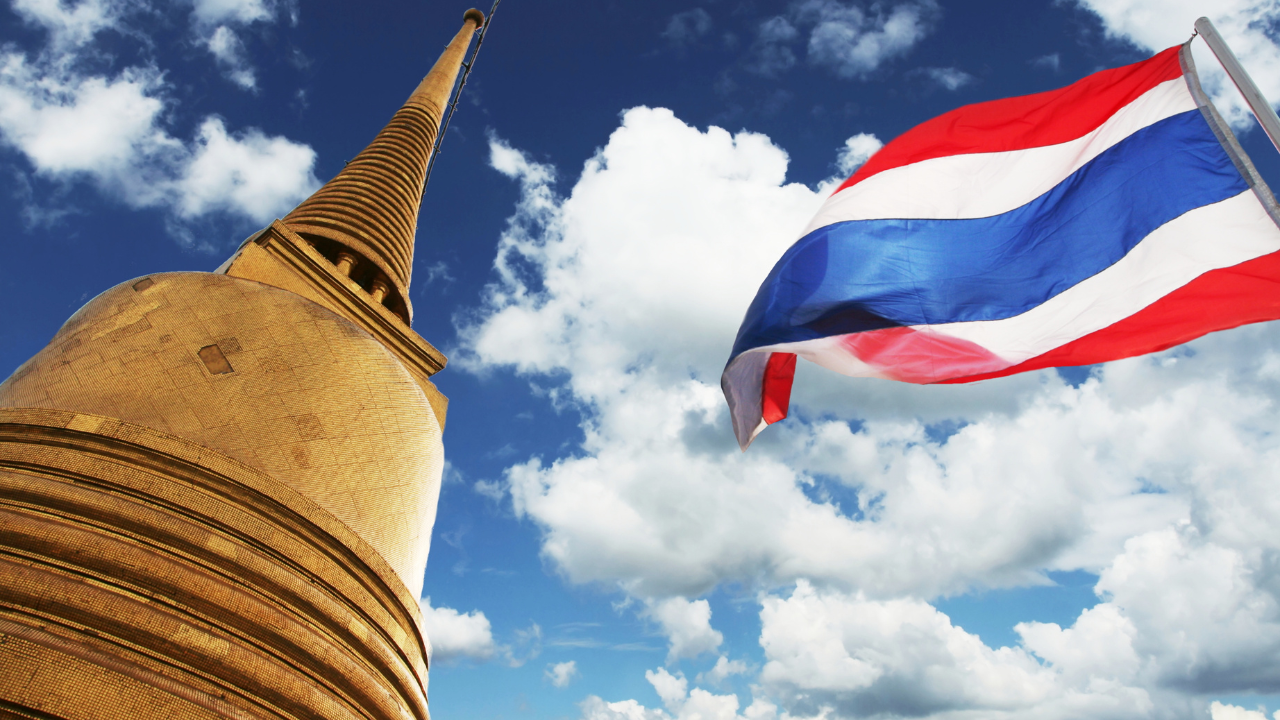
What a difference a few decades make.
In the mid-2000s I was a journalist covering Thai politics. At that time Thaksin Shinawatra was the controversial Prime Minister, there was a low-level war in the south with Muslim insurgents, and possessing marijuana could get you in serious trouble.
On a recent visit back to Thailand I noted that Thaksin has recently been released from jail for corruption, the low-level conflict is now with neighboring Cambodia, and there are now over 18 thousand cannabis dispensaries around the country.
If you gave me a crystal ball back in 2005 and told me that Thaksin would be in jail 20 years later I might not have been surprised. He was always highly provocative and pushed the limits of what the powerful Thai Monarchy and the elites that surround it would tolerate. He was compared with another blustery businessman-turned-politician of the day, Italy’s Silvio Berlusconi, and his supporters lionized him as someone who could turn his hard-charging business success into results for Thailand. Both Berlusconi and Shinawatra could be seen as precursors to President Trump, with much of the U.S. perhaps now wishing they learned the lessons of these countries when it comes to electing narcissistic businessmen who claim to be able to solve all their country’s problems through the sheer force of their personality.
Thaksin’s political power didn’t wither with his push from power in the military coup that removed him from office in 2006 while he was at the U.N. General Assembly. Despite his popularity Thaksin was deposed because of charges of corruption and accusations of undermining the Monarchy. Thaksin went into exile in Dubai for 15 years but continued to exercise power through his Thai Rak Thai Party, which evolved into the Pheu Thai Party. Thaksin’s youngest sister, Yonglung Thinawatra, eventually ascended to Prime Minister before also being forced from office by a military coup.
Thaksin returned from exile in 2023 and served a limited prison sentence and his party has seen its power wane. But the shifting sands of political power in Thailand don’t reside solely in the hands of electorate, which the continued interference of the military has repeatedly shown. An unelected elite exercise the true power in Thailand. A network composed of royalist supporters and members of the military and judiciary use constitutional levers and their ability to appoint Senators to keep Thailand as country that is a democracy with its training wheels still on.
In elections held in May of 2023 the country’s progressive Move Forward Party garnered enough votes to form a government but wasn’t permitted to because the same elites saw it as a threat. The progressives were called unpatriotic for their perceived lack of support of the Thai military in its border war against Cambodia (which despite President Trump’s claims, he did not end). They were also seen as challenging the country’s strict laws against criticizing the Monarchy, a taboo subject in Thailand.
Still, it was surprising how badly the progressive party fared in the elections of February 8th. The Move Forward party – rebranded as The People’s Party after being banned – moderated its stance against the Monarchy and affirmed its support for the country’s military. Many of the country’s young people still embraced its message of change and are disheartened by its poor results in the election. Analysts explained the outcome by pointing to a population worried about the TPP’s push for rapid change, and some suggested an unsettled global landscape disrupted by a mercurial U.S. President increased that wariness. Thai’s felt the need for a more conservative option and Bhumjaithai Party will form the next government.
While these concerns are easy to understand, Thailand runs the risk of being left behind. Business is stifled by red-tape and nearby Vietnam offers better options for global companies looking for manufacturing options. The country’s economic growth rate and its tourism income still haven’t recovered to pre-pandemic levels.
Yet examples of change are there to see in Thailand. For this traveler the booming cannabis trade was a stark difference from the atmosphere in the past around Southeast Asia when it came to recreational drugs in the region. For years, travelers were warned about strict laws and cautionary tales of westerners being thrown in jail for even trifling amounts (see the movie “Return to Paradise” for an example of such paranoia).
The new thinking on cannabis and the youth movement powering the various incarnations of progressivism show that Thailand has a yearning to evolve. With its rich culture and magnificent geography cementing its status as a tourism juggernaut, it holds some advantages. I wonder what a visit in another twenty years will hold for Thailand.
To find out more, please reach out to info@interforinternational.com
Related Blog
VIEW ALLInterfor International‘s Weekly Security Digest – October 20, 2026
Interfor International‘s Weekly Security Digest – October 13, 2026
Interfor International‘s Weekly Security Digest – October 6, 2026