

The traditional definition of due diligence is “research and analysis of a company or organization done in preparation for a business transaction.” However, when it comes to engaging a corporate intelligence firm, due diligence goes far beyond definitions. It’s about understanding who you’re really dealing with—and ensuring there are no surprises once a transaction closes.
Due diligence investigations typically unfold in two complementary phases. The first focuses on open-source intelligence (OSINT), proprietary databases, social media, deep/dark web research, and public record research, where applicable; the second adds reputational and human intelligence to complete the picture.
In Phase 1, investigators perform an exhaustive review of available records on any individual or company involved in a transaction. The United States has some of the most open records in the world, and a well-scoped inquiry will examine identity and credential verification; corporate affiliations and ultimate beneficial ownership mapping; civil, criminal, bankruptcy, and lien or judgment searches; sanctions and watchlists (including OFAC, UN, and EU lists), enforcement actions, and politically exposed persons (PEP) screening. It should also cover real property, vehicles, and real asset ownership; litigation and regulatory actions; local-language media; social media and dark web reviews; professional licenses, education, and employment verification; and, where appropriate, a review of the source of wealth.
Because of the strong public information available in the U.S., it can sometimes be sufficient—depending on the nature of the deal—to stop after Phase 1 if no red flags arise. However, for transactions involving senior leadership retention, complex ownership structures, or emerging markets, suspicions or allegations, a more in-depth review is essential.
Phase 2 adds depth through local and industry-specific source inquiries. This involves gathering human intelligence through discreet interviews with individuals who know the target. This phase clarifies issues raised in Phase 1 and reveals nuances about character, ethics, and business behavior that don’t appear in public filings.
A good rule of thumb is to advance to Phase 2 when key principals will remain in place post-transaction, when operations involve high-risk jurisdictions or opaque ownership structures, when there are PEP or sanctions linkages, or when Phase 1 results show inconsistencies or unexplained gaps.
Outside the U.S., moving beyond public records becomes even more essential. Many countries have limited, inconsistent, or unreliable data, and in some jurisdictions, the media is neither free nor objective. Even in developed markets like Western Europe, privacy regulations restrict access to information. That’s why global due diligence demands an integrated approach—combining OSINT with field-based human inquiries—to produce a full and accurate picture of a subject’s background and reputation.
The cost and timing of these investigations depend on the subject’s complexity, name commonality, litigation volume, and number of jurisdictions involved. Typical timelines range from 3–5 business days for a screening review, 7–12 business days for standard enhanced due diligence, and 2–3 weeks for expanded work involving field investigations.
While technology has transformed the research landscape, it’s important to remember that automation has severe limits. The marketplace is full of AI-based data aggregators offering fast, low-cost “due diligence” reports. But raw data without expert analysis can easily mislead. Interfor utilizes advanced AI systems to leverage OSINT and data analytics, accelerating research. However, every finding is still verified, interpreted, and cross-checked by an experienced investigator. True due diligence requires human judgment—the ability to connect patterns, challenge inconsistencies, and discern credibility.
Cutting corners may seem tempting when deal momentum is high, but the cost of getting it wrong can be catastrophic: failed investments, regulatory exposure, or reputational harm. Due diligence isn’t just a compliance requirement—it’s a risk management discipline that protects capital, reputation, and long-term relationships.
For organizations seeking confidence before committing capital or reputation, professional due diligence is indispensable. To discuss your specific needs, email info@interfor.international.
To find out more, please reach out to info@interforinternational.com
Related Blog
VIEW ALL
Interfor International‘s Weekly Security Digest – February 24, 2026
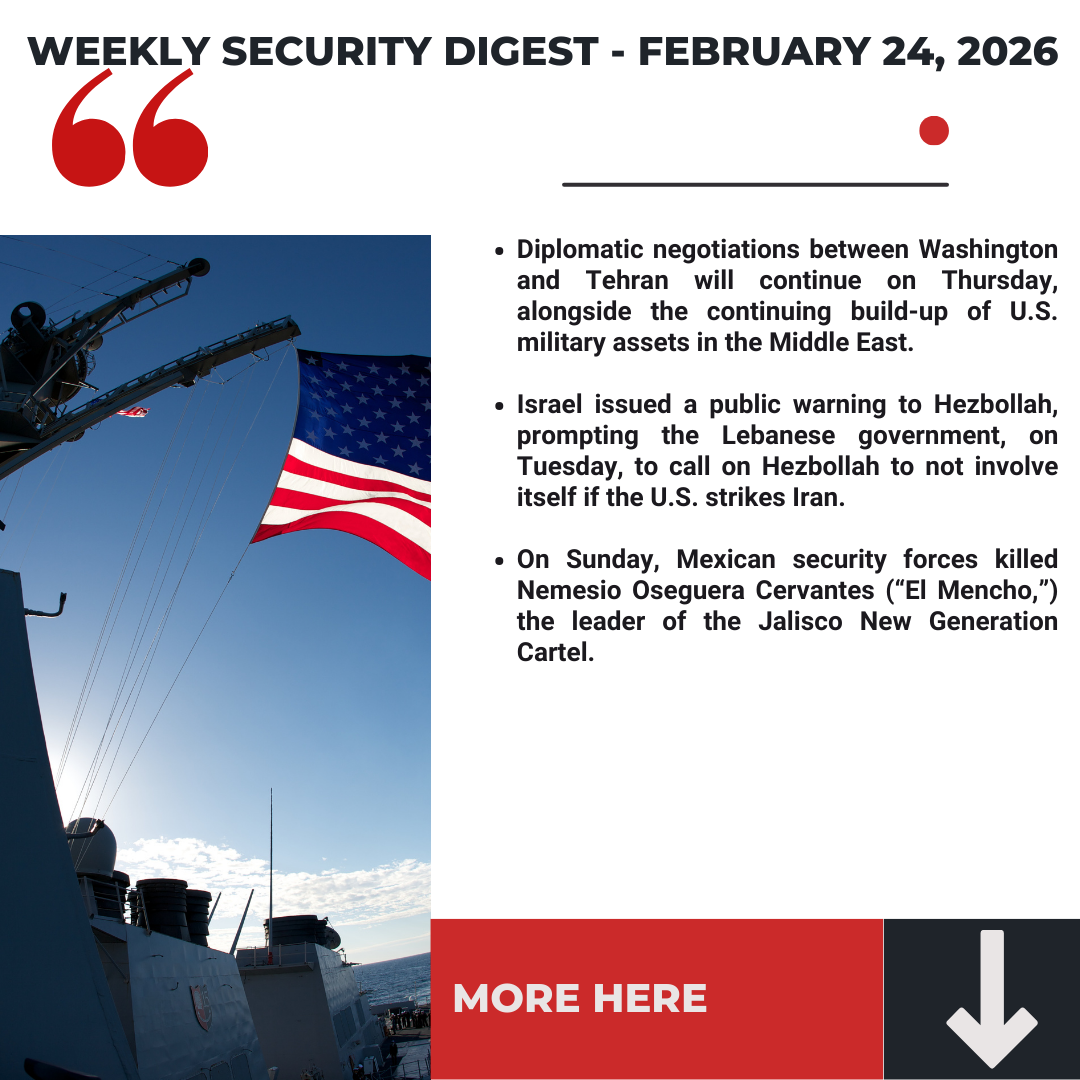
Interfor International‘s Weekly Security Digest – February 17, 2026