


For decades, relations between Israel and Lebanon have been bedeviled by the persistent influence of Hezbollah. Last week’s U.S.-brokered framework agreement between the two countries represents a major breakthrough and, if implemented, could fundamentally reshape security along Israel’s northern border.
While not yet a formal peace treaty, the agreement establishes a roadmap toward one. It calls for the continued implementation of a ceasefire, the expansion of areas under the exclusive control of the Lebanese Armed Forces, and the removal of Hezbollah fighters from southern Lebanon. It also commits both governments to continue direct negotiations aimed at resolving longstanding security issues and building toward a more comprehensive agreement. Most importantly, the framework explicitly recognizes that the future of Lebanon should be determined by its sovereign government—not by non-state armed groups.
That principle may prove to be the agreement’s most consequential feature.
For years, Hezbollah has operated as a state within a state, maintaining an independent military capability while exercising enormous political influence inside Lebanon. Successive Lebanese governments have often lacked either the capacity or the political will to challenge the organization directly. Today, however, Beirut appears to be taking a markedly different approach.
The Lebanese government has increasingly asserted that decisions regarding war and peace must belong to the state alone. It has supported expanding the authority of the Lebanese Armed Forces in southern Lebanon and has publicly embraced arrangements that would exclude non-state armed groups from controlling territory near the Israeli border. Even before this latest agreement, Beirut had begun taking unprecedented legal and political steps to curb Hezbollah’s authority.
That shift reflects both changing domestic politics and the enormous costs Lebanon has paid as a result of repeated conflicts. Many Lebanese increasingly view Hezbollah’s independent military operations as exposing the country to devastating economic damage, international isolation, and destructive wars that serve interests beyond Lebanon’s own. While Hezbollah retains significant support among parts of the population, it no longer enjoys the broad political consensus that once insulated it from criticism.
Whether this new posture can translate into lasting change remains uncertain.
Hezbollah has already rejected the framework agreement outright, describing it as a surrender and insisting it will not disarm. The organization retains substantial military capabilities and deep political networks, making implementation extraordinarily difficult. Any effort by the Lebanese state to extend full authority into Hezbollah-controlled areas risks provoking confrontation, while Israel has made clear that its own military posture will remain tied to Hezbollah’s actions on the ground.
Nevertheless, the agreement is historically significant precisely because it represents something that has been absent for decades: a shared recognition by Israel, Lebanon, and the United States that Lebanon’s sovereignty ultimately depends on strengthening state institutions rather than accommodating armed proxies.
For businesses, investors, and multinational organizations operating in or evaluating the region, the agreement should be viewed as an important political indicator rather than a guarantee of stability. It signals genuine diplomatic momentum and an increasingly assertive Lebanese government, but implementation will likely be measured over months—if not years—and setbacks should be expected.
The agreement does not end the security challenges facing the region. But it may mark the beginning of a new chapter in which Lebanon itself is increasingly willing to confront the very organization that has long constrained its sovereignty.
To find out more, please reach out to info@interforinternational.com
Related Blog
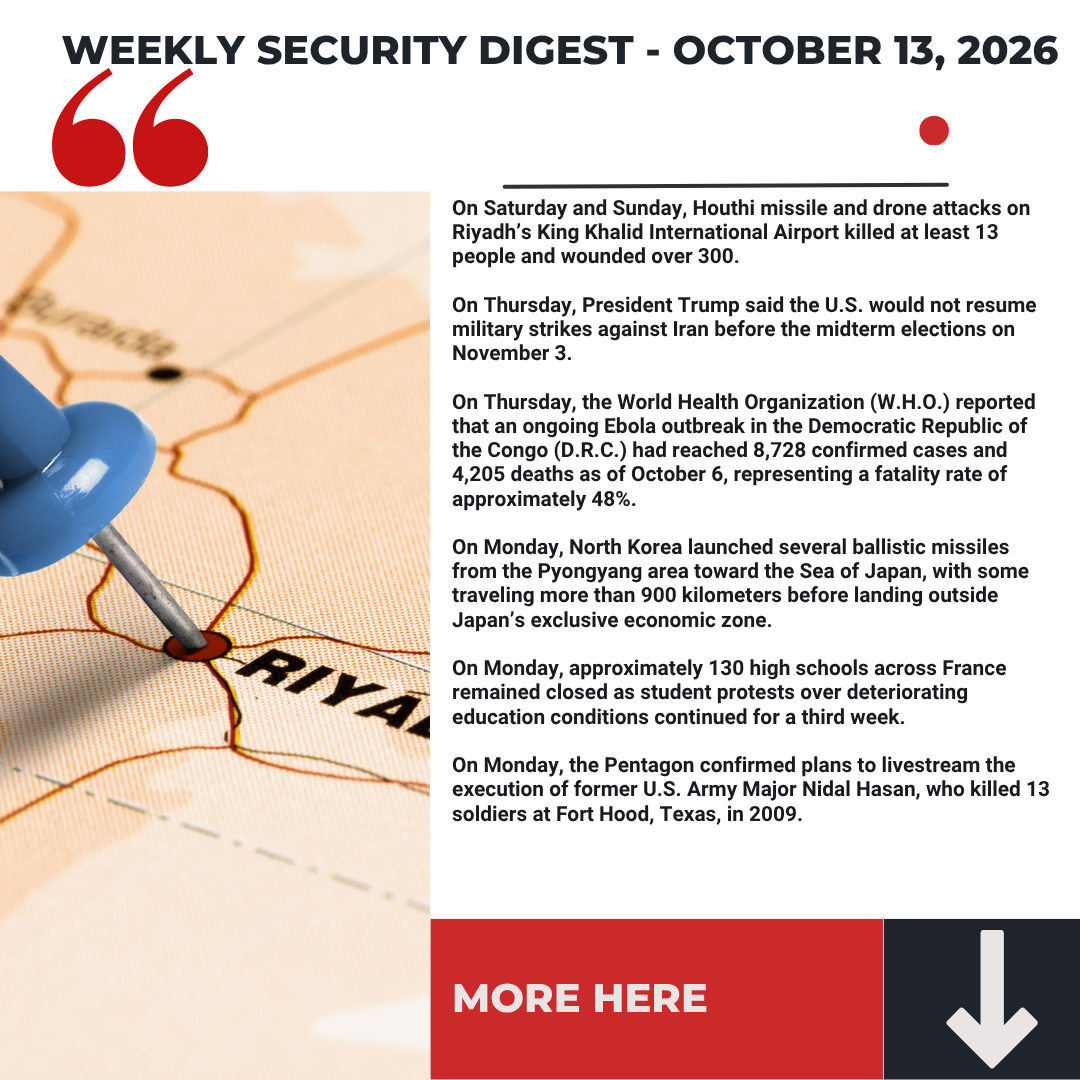
VIEW ALLInterfor International‘s Weekly Security Digest – October 13, 2026
Interfor International‘s Weekly Security Digest – October 6, 2026
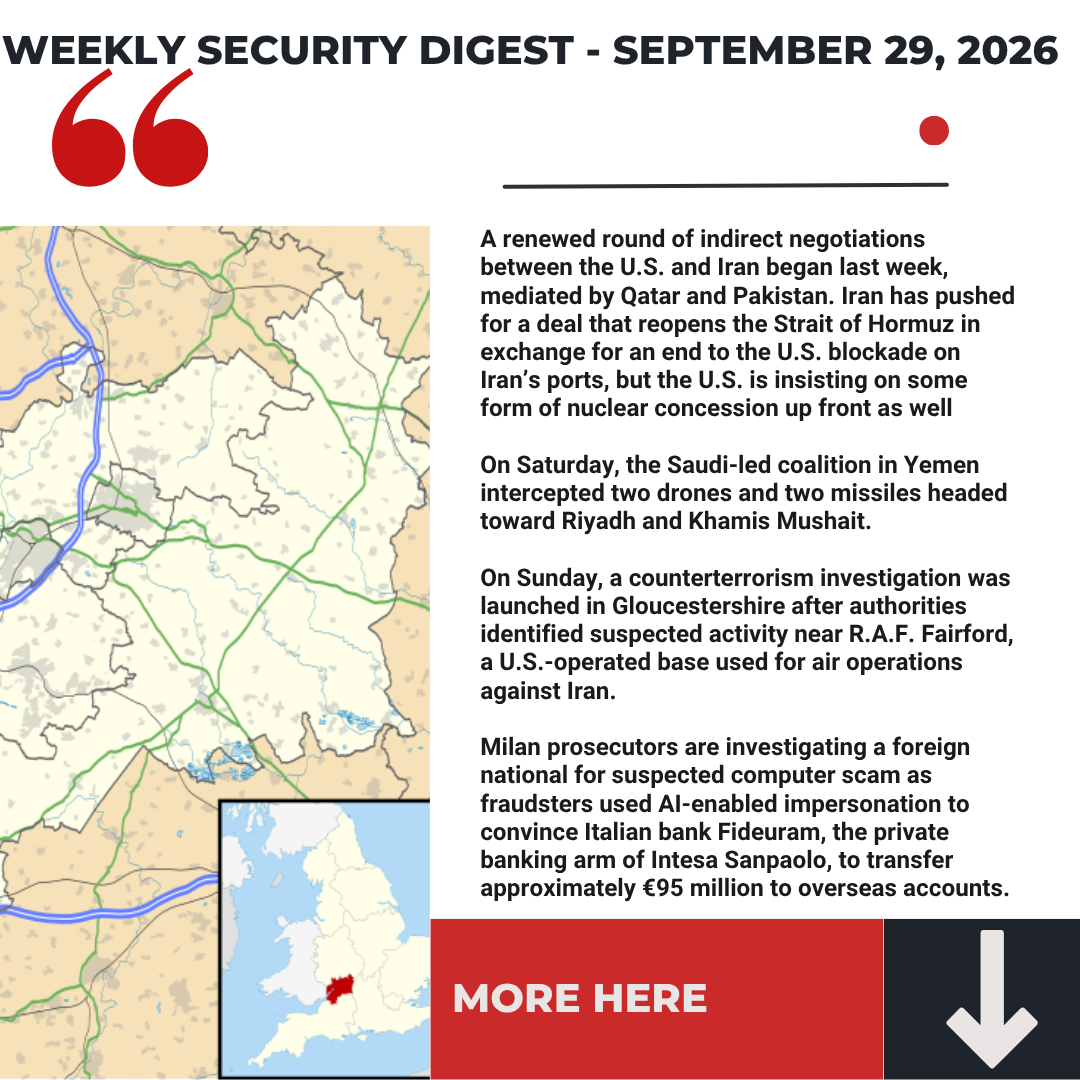
Interfor International‘s Weekly Security Digest – September 29, 2026