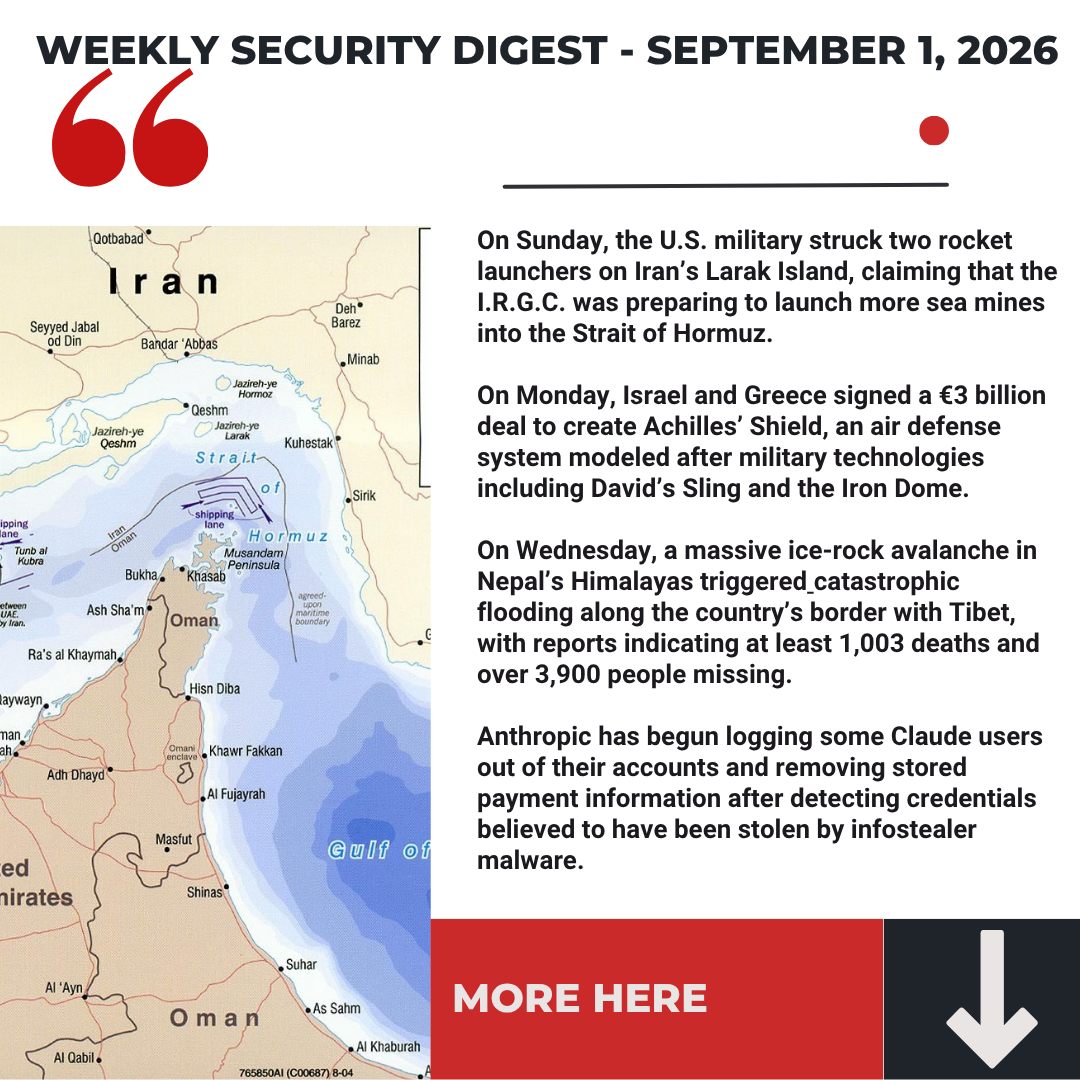


While a ceasefire on the Iran conflict potentially takes hold, as of this writing the guns have barely cooled in the Middle East. Even after word of the ceasefire came out Iran was still firing on the Gulf and Israel’s actions against Hezbollah in Lebanon continued. What comes next is anyone’s guess as a mercurial U.S. President and a fractured extremist regime warily agree to a two week pause in hostilities.
As news of ceasefire was announced Iran targeted Saudi Arabia’s East-West pipeline, power stations and water facilities in Kuwait, and a gas facility in the United Arab Emirates. If there weren’t a supposed ceasefire right now, we would be talking about these strikes as escalatory, particularly the pipeline attack, which brings oil to the Red Sea, facilitating the key alternative route to Straits of Hormuz transit. There was also a strike on a refinery in Iran earlier, for which Israel and the U.S. are denying responsibility.
The Islamic Republic is insisting it will collect $1 per barrel of oil through the Strait of Hormuz during the ceasefire. If President Trump allows this, there will be backlash from the Gulf States. If, however, tankers begin transiting the Gulf without paying, Iran will have to choose between breaking the key term of the ceasefire – a reopened Strait – or effectively conceding “control” of the Strait.
So, at least as of now, hostilities have not ceased and the Strait is not open in accordance with maritime law. And yet, Trump does, for the moment, seem invested in the war being over. The President has been badly battered by how the war has gone, despite his blustery rhetoric, with recent polling showing a 30% approval rating, down from 39% when the Iran conflict started. While he and his supporters may claim that his threat of destroying “a whole civilization” brought about this ceasefire, he has caused huge damage to himself domestically and internationally. Dozens of members of Congress have called for the 25th amendment to remove the President from office because of his unhinged threats via social media. Such threats have been denounced widely overseas, including by the Pope, and the rest of the world marvels at the seeming madness emanating from the White House. President Trump may be primarily signaling an end to the war for the benefit of markets – whose variability he has showed particular sensitivity to in the past.
No one knows where this “ceasefire” is headed. The leaders of the U.S., Iran, and Israel have the capacity to surprise over the next two weeks. Here are a few things that could determine how the ceasefire will shake out:
• What will Israel do to advance its objectives? Will Netanyahu simply advocate for resuming the attacks on Iran, or will he simply continue Israel’s campaign against their nemesis and ask forgiveness rather than permission?
• What will Mohamed bin Zayed Al Nahyan, the President of the UAE, and Mohammed bin Salman, Saudi Arabia’s Crown Prince, communicate to Trump? The UAE was almost certainly against ending this conflict before a more conclusive Iranian defeat, and Saudi Arabia, after the pipeline strike, is far less likely to be happy about what as of now looks like a unilateral ceasefire.
• Will Trump be provoked by Iranian rhetoric? Iranian officials are claiming a Trump retreat, a resounding Iranian victory, U.S. approval for Iranian enrichment, and a variety of other spin that would anger Trump. Is he so committed to seeing markets recover that he’s willing to be criticized by allies and humiliated by adversaries?
- How will the US, Iran, and global shippers navigate the conditional reopening of the Strait of Hormuz? Will the U.S. sit back without objection as Iran collects millions in tolls? Or will disputes around this practice spark a new episode of hostilities?
Even if this ceasefire holds together, considerable damage to the global economy will continue to unfold. The head of the International Economic Agency has said that the current oil and gas crises is worse than those of the 1970s and in 2022 combined. Even if the Strait does open the cascading impacts of its closure are still taking form as ships that were to reach Australia and East Asia have not arrived and that effect has not yet been truly felt. Similarly, fertilizer is an important commodity shipped through the Straits and its closure has increased food insecurity and will continue to cause the price of food to spike around the world. The same story is true with disrupted helium and aluminum markets.
As of this writing the Iranians are only allowing select ships through the Straits of Hormuz from countries that they feel are not hostile to it. This will obviously quickly a major sticking point if the ceasefire is to hold. Similarly, there are contradictory reports on whether the ceasefire includes Israel’s campaign in Lebanon.
Interfor will continue to monitor the situation and we encourage clients to reach out with any specific questions or concerns.
To find out more, please reach out to info@interforinternational.com
Related Blog
VIEW ALLInterfor International‘s Weekly Security Digest – September 8, 2026

Interfor International‘s Weekly Security Digest – September 1, 2026