

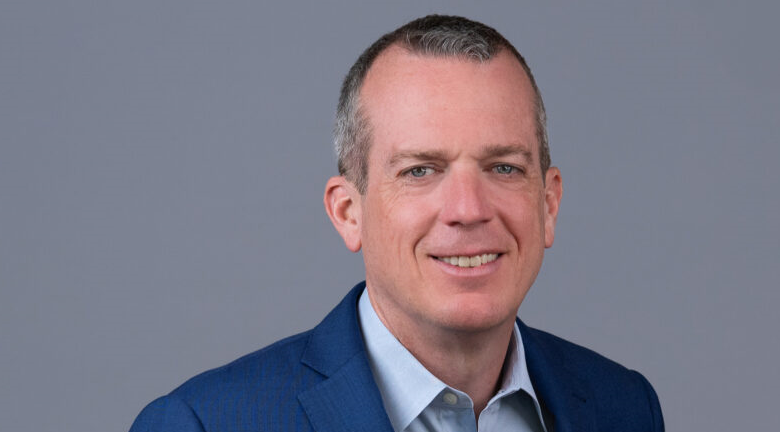
Tom Hardin spent the early part of his career as a hedge fund analyst in the United States. In 2008, he entered into a cooperation agreement with the Department of Justice and played a key role in helping the U.S. government uncover how insider trading operated within the financial services sector. Under the codename “Tipper X,” Tom became one of the most active informants in securities fraud history, contributing to more than 20 of the 80+ convictions in “Operation Perfect Hedge”—a sweeping crackdown on Wall Street that became the largest insider trading investigation of its time. After resolving his case in 2015, Tom was invited by the FBI’s New York City office to speak to its rookie agent class. Today, he is a sought-after global speaker and corporate trainer, known for offering a unique frontline perspective on conduct risk, behavioral ethics, and compliance. His memoir, “Wired on Wall Street,” will be published by Wiley in 2026. He is a member of Interfor Academy.
Can you tell us a little bit about the circumstances that found you working as an informant for the FBI ?
I was 28, working as an analyst at a hedge fund. Like a lot of people on Wall Street, I felt pressure to prove myself. The firm’s strategy shifted from long-term investing to “make money every month.” That subtle shift created this environment where, even if it wasn’t said explicitly, you felt like you had to hit the number—whatever it took. No one ever told me to break the law, but I started rationalizing. I called the tips I got “immaterial.” I told myself I was still a good guy. But one day, two FBI agents stopped me outside my apartment. They had everything. They gave me a choice—cooperate or be charged. I became Tipper X, a cooperating witness in the largest insider trading investigation in decades. I spent almost two years undercover, helping build cases against others. That period reshaped everything I believed about accountability, pressure, and how easy it is to drift into ethical failure.
The drive toward profits can encourage risk-taking. How do you help teams build a culture that’s both ambitious and ethical?
It starts with how we set goals. I always tell teams: your goals need to be specific, challenging, and achievable. When they’re just challenging—but not realistic—that’s where people get in trouble. They start thinking, “Well, everyone’s doing it,” or “I’ll fix it next quarter.” That’s when shortcuts get normalized. And culture plays a huge role. A leader might say, “Do what it takes,” and mean it as motivation—but if you don’t clarify the boundaries, people will interpret that based on the pressure they feel. That’s why ambiguity is so dangerous. I work with teams to get more behavioral in how they measure culture. Instead of asking, “Rate our compliance culture,” I suggest they ask:
- Which of our values are real? Which are performative?
- True or false: In this firm, people who bend the rules get ahead.
- Do I feel under pressure to cut corners to meet expectations?
Those questions help identify where pressure is building—and where ethics might be breaking down.
Could you talk about what the “reduction trap” is and how it leads to unethical decisions?
Absolutely. The reduction trap is something I know personally. When I was breaking the law, I wasn’t calling it that. I called it “just a one-off,” “not material,” “sort of gray.” Those are reduction words—they shrink the perceived severity of what we’re doing.
We all use them. Employees might say, “This is just part of how the game is played,” or “This isn’t a big deal.” What’s happening is they’re managing their self-image, not their risk. And if leadership isn’t tuned into that language, the trap spreads. Culture becomes a collection of unchallenged justifications. So, I encourage companies to get better at spotting those words and replacing them with real questions: Is this right? Would I be comfortable explaining this on the front page of the paper? That internal check can stop the trap before it closes.
A lot of your corporate speaking relates to ethics and risk. What are some life lessons you took from your informant experience?
That period of my life was the most isolated, most stressful thing I’ve ever experienced. I couldn’t talk to anyone. I was wearing a wire, sitting in rooms with people I was trying to build relationships with, pretending everything was normal. What I learned is that pressure doesn’t make you unethical—it just reveals what’s already shaky. I didn’t have the internal tools or external support to deal with the stress in a healthy way. After cooperating, I had to rebuild from zero—not just professionally, but emotionally. I turned to running—literally. I ran a 5K, then a marathon, then ultramarathons. It helped me process the shame and gave me a way to move forward. Now, when I speak, I tell teams: don’t underestimate the power of silence. Most people make their worst decisions in isolation. So, build a culture where people don’t have to sit in silence with their concerns. Give them a way to speak up without fear.
You’ve commented on incentives in education driving cheating. How does that apply to business?
It’s the same pattern, different domain. In education, if all we care about is the GPA, kids will cheat to get it. In business, if all we care about is hitting quota, people will game the system—or worse. The trick is to build incentives that reward ethical decision-making, not just performance. That means recognizing the person who says “no” to a bad deal. It means measuring how results are achieved, not just the results themselves. One thing I challenge leaders with is this: What do you actually celebrate? If you only promote the rainmakers, regardless of how they get there, that’s the message your culture hears. Incentives are loud. If they don’t match your values, the values lose—every time.
Part two of this interview coming soon!
Interested in having Tom speak at an event? Reach out to Interfor Academy at Academy@interfor.international
To find out more, please reach out to info@interforinternational.com
Related Blog
VIEW ALLInterfor International‘s Weekly Security Digest – October 6, 2026
Interfor International‘s Weekly Security Digest – September 29, 2026
Interfor International‘s Weekly Security Digest – September 22, 2026